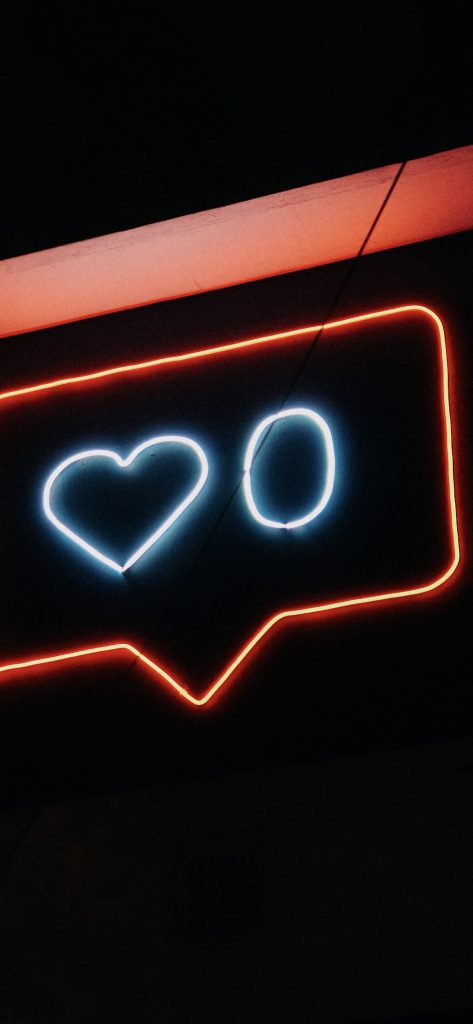
They got us hooked on likes and double-taps and now want to deprive us of them? As announcements unfold, we are discovering that counters could be reset to zero, or more precisely hidden. Is the end of the like counter a real revolution or just consolidation & an opportunity for a new use of Social by brands?
End of the like counter & emergence of dark social
Facebook is a powerful platform in France in terms of content production, consumption and sharing. Whether on the newsfeed, on publishers’ articles – where comments have become real forums – and even more in groups. The latter are, moreover, spaces where members better grasp the framework in which their content is distributed and can isolate it from close or less close contacts for whom it is not intended. Seeing the success of certain groups in France, such as Wanted for example, or those of certain brands such as Sézanne, we can say that Facebook succeeded in energising the platform through this feature.
However, it is true to say that user behaviour on the platform has changed. Content production and sharing are more thoughtful and responsible. Indeed, sharing content is experienced by users as more demanding because success is assessed in volume of likes received (I have no likes, my content is rubbish) or as more accountable since it can potentially be read by unwanted people (will my boss – or BFF, boyfriend, parent – see that I went out last night). The announced end of like counters on social networks and the continued growth of Stories on Snap, Instagram, Facebook, etc. are phenomena that free up and support this production of content.
Another structuring element for social-media users is that of Dark Social, non-visible sharing. A recent study published by Global Web Index (The Rise of Dark Social / February 2019) shows that nearly 63% of internet users primarily use private messaging to share content, against 54% who share it on their social profile and only 37% by email. Messaging is the most popular way to exchange content on the Internet.
The impersonal and public dimension of sharing on the walls of one’s own social accounts and users’ maturity in managing their privacy have changed the way content is shared on the Internet. Snapchat and Instagram, two of the fastest-growing platforms today, have bet on sharing that is not public but identified: you choose who you want to send your content to or whether you want it shared urbi & orbi. Facebook’s integration of the ability to share in Messenger with some of one’s friends goes in this direction too.
A coming of age for social media strategies
If we consider that a brand’s objective is to foster engagement, the sharing of its content and, at the same time, to benefit from word-of-mouth recommendation, then the emergence of more underground and less visible practices is in itself no danger, only a variable to take into account.
Beyond “Vanity Metrics”, brands should be less interested in public counters than in their own KPIs measured in terms of advertising impact and content experience. Platforms such as Snapchat have been sources of strong learning for users and for brands. They have learned to track and measure their performance beyond the showcase of likes & shares.
Being popular is possible just by talking about oneself and being interested in oneself. That is the stake for brands on social networks tomorrow. Continuing the work on content, targeting and message sequencing with a logic of power. Seeking to engage audiences and generate interaction must remain at the centre of content strategies, but less in a display approach and more in a relationship with consumers. Engagement must carry meaning for the relationship between brand and consumer and allow it to grow.
So managing by interaction still makes sense for consideration campaigns, making it possible to work on top of mind or brand preference, but less with the aim of displaying a like counter to the public.
The disappearance – or at least the hiding – of the fan counter on Facebook has not limited brands’ interest in the platform, but has helped them move away from this indicator and the associated formats to focus on what must make them successful.
Measure social like traditional media, or even a bit more.
Social networks, and the Facebook ecosystem first of all, are spaces whose power is as strong as that of traditional media in terms of monthly coverage, for example. In this sense, you must adopt strategies there that follow the same objectives: working on a brand’s awareness, strengthening preference, generating purchase intent, even selling directly online.
To do so, platforms today make it possible to use the same measurement tools such as post tests with Kantar, Médiamétrie, Nielsen, etc. and to go further than traditional media by tracking users’ online behaviour and contribution to sales.
Measuring it more traditionally also means having the right measure of social and sometimes seeing further or bigger than community management. Doing social means having the door open to find your core target and develop a mass-media… targeted approach there.
Dark Social & the end of the like counter yes, but consolidation of a new era of Social, more in line with a mature vision of social networks for brands.
PS: You are of course entitled to share this article… via Messenger if need be 🙂
PS2: An interesting article on the impact of removing the like counter among influencers.
Going further: our strategic consulting offer.
On the same topic: « A shake-up coming in Social? Review of trends in the US market. » and « Social growth in France: what drives it and how to read it? ».
Keywords