
There was an after-iOS14 and the latest CNIL regulations: while the signals collected on site via cookies have decreased, brands have had to react and must continue to secure their first-party data.
How can Social be used to grow databases? But above all, how can they be effectively integrated into Social set-ups?
In 2021 the future of the cookie seemed rather uncertain: the CNIL was introducing new rules on consent banners and Apple was rolling out its iOS14 update which, with its ATT (App Tracking Transparency) feature, was going to greatly impact signal collection.
More than 2 years later, more fear than harm: brands have managed to adapt. The loss of signals could be assessed and performance sometimes restored.
Platforms challenged each other to roll out solutions very quickly to evolve their pixels/tags and thus optimise signal collection, notably via CAPI (conversion API) and other Enhanced matching.
But beyond the analysis and assessment of campaign performance, the post-iOS14 era and stronger CNIL oversight have an impact on your performance: your retargeting pools are largely reduced – a visitor to your site who has not accepted cookies and/or accepted Apple’s advertising tracking will not be retargetable.
What are the impacts on campaigns?
- Less volume in retargeting potential in performance campaigns = direct loss of potential business
- The creation of custom audiences, previously very effective on site visitors or specific actions, is less precise and complete
- Bias in measurement and therefore in optimisation
And it is the brands that had bet the most on their databases (customers and prospects) that bounced back fastest. While the CRM lever generally offers the best on-site conversion levels, combining it with paid media is key to optimising its impact:
- Building lookalike audiences (marketing lookalikes) very close to the brand, and also using databases as exclusions to avoid audience overlaps
- Deploying more effective sequenced set-ups with messages adapted to the user’s position in the funnel
- Boosting performance on acquisition & repurchase objectives
Precious database audiences often deliver excellent e-commerce results, themselves limited by the size of the database, so how can Social be used to grow your 1st-party data?
The ecosystem
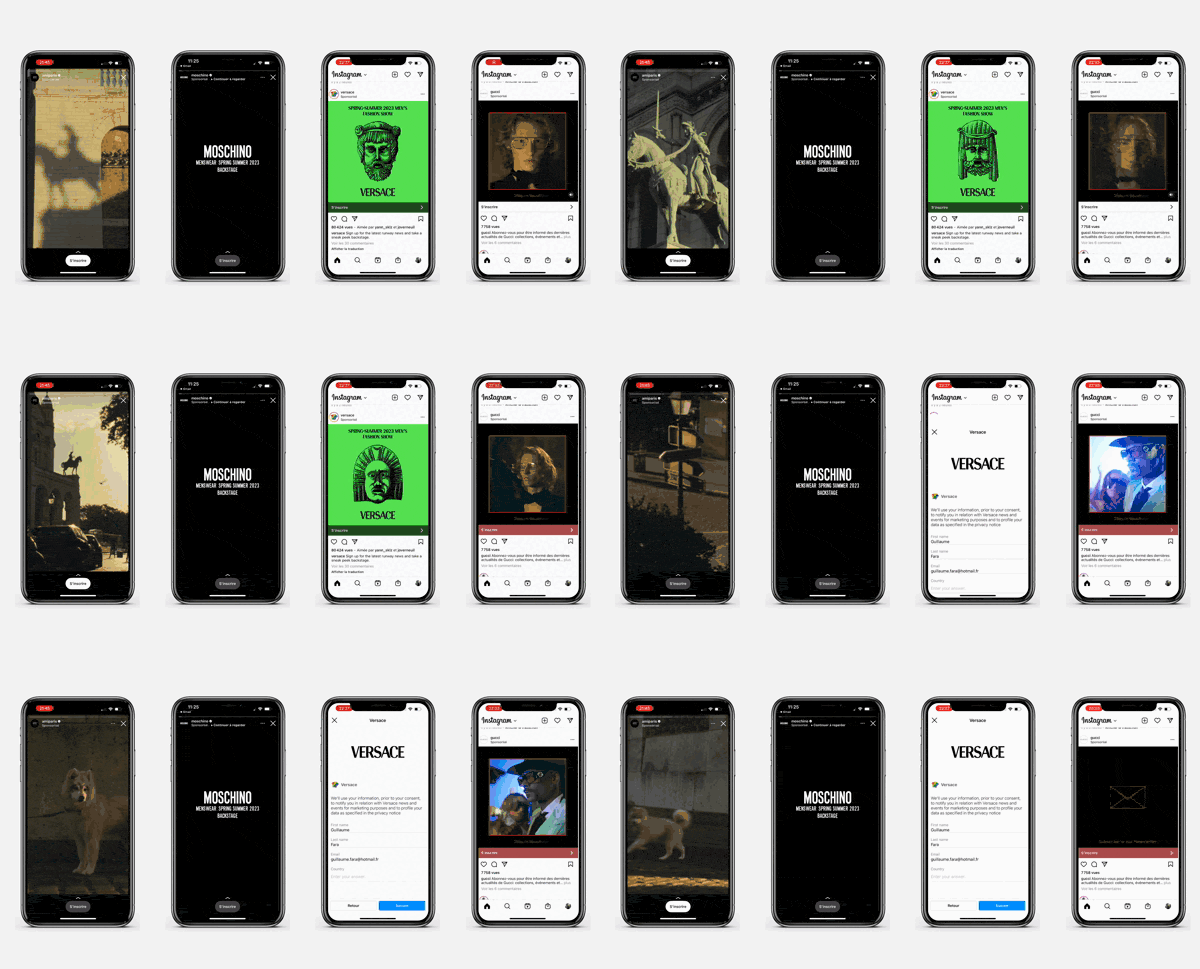
Now that lead collection campaigns are possible on all platforms, you will have to make a strategic choice.
- Avoid diluting your budgets to guarantee impact
- Favour the platforms you already invest in (in branding or performance)
- Content must guide your choice; lead collection formats on TikTok are not the same as on Meta.
While some platforms are more mature than others and offer more advantageous costs per lead, it is the combination of targeting + advertising that will optimise collection.
The message
The message is strategic in orchestrating lead collection campaigns. To optimise costs per lead, it is preferable to offer users an incentive; their opt-in should let them unlock something exclusive:
- Price Off / Privilege Sales: one of the most effective messages in terms of CPL and short-term business generation.
- Contests or samples: depending on the prizes, or the value of the products, the formula is very effective. On the other hand, the leads collected are by nature less qualified and therefore harder to convert.
- Other exclusives for brand image: to receive a reminder for a live event, for example, discover a specific collection in preview, get access to a white paper or a specific brochure – the productivity of the lead campaign varies depending on the audiences’ appetite for the chosen exclusive but also on the power and awareness of the brand.
The audiences
Define your audiences according to your objectives and rationalise them according to your budget to maintain good impact levels.
Marketing personas
In pure prospecting logics and to evolve your 1st-party pools in the desired direction you can include all of your marketing personas in an A/B test within the lead campaign. By nature, still little educated about the brand, personas tend to record relatively high costs per lead.
Retargeting of visitors/engaged users/video viewers…
Base the lowest-funnel audiences in order to secure them and be able to press them harder via Social and CRM, a strategy that also maximises the campaign’s short-term profitability. Beware, however: in the absence of branding campaigns, this audience resembles your current customers and fans more than your target personas.
Broad audiences and ASC
Cast a wide net and let the message filter the new prospects. Broad targeting, even enhanced by the platforms’ AI, will optimise the cost per lead and avoid being limited to the pre-defined acquisition framework.
The tigrz advice
You should always exclude your current database to limit duplicates. To offset the loss of signals, remember to always include the retargeting audience of your engaged users (it is the most valuable audience with which you want to keep in touch as a priority).
Once your database-extension strategies are in place, how do you optimise your performance and fully integrate them into your set-ups?
Measure the CRM performance of the leads collected
To make sure the set-ups are profitable in the short and medium term, you must label the leads collected and track the revenue generated over several months; this will let you A/B test the real business impact of the different collection mechanics to guide the next launches and tests.
Differentiate messages and segment your CRM pools
Depending on the size of your CRM pools (there must be a minimum volume), we recommend segmenting your databases so that you can push different messages, or even isolate dedicated budgets on segments.
Prioritise separating prospects and customers in databases to differentiate pressure on audiences and to adapt the 1st-buy vs. repurchase message.
It is then possible to go much further and create database audiences according to purchase frequency, categories of products purchased, but also interest in promotions.
Continuous A/B testing is key to optimising conversion strategies.
Use your databases to strengthen your audience strategy
Updating your databases on advertising platforms is strategic to limit the cannibalisation of your campaigns (databases must be excluded from your prospecting or included in specific set-ups).
Then, use the segmentation of your databases to create more effective, contextual lookalike audiences on certain activations.
On your marks, get set, prospect!
Going further. See also tigrz’s Data & AI expertise.
On the same topic: « First Party First: the Lead Ad as an accelerator of your social data strategy » and « Social CRM: how to retain the new customers and audiences acquired during lockdown? ».
Keywords